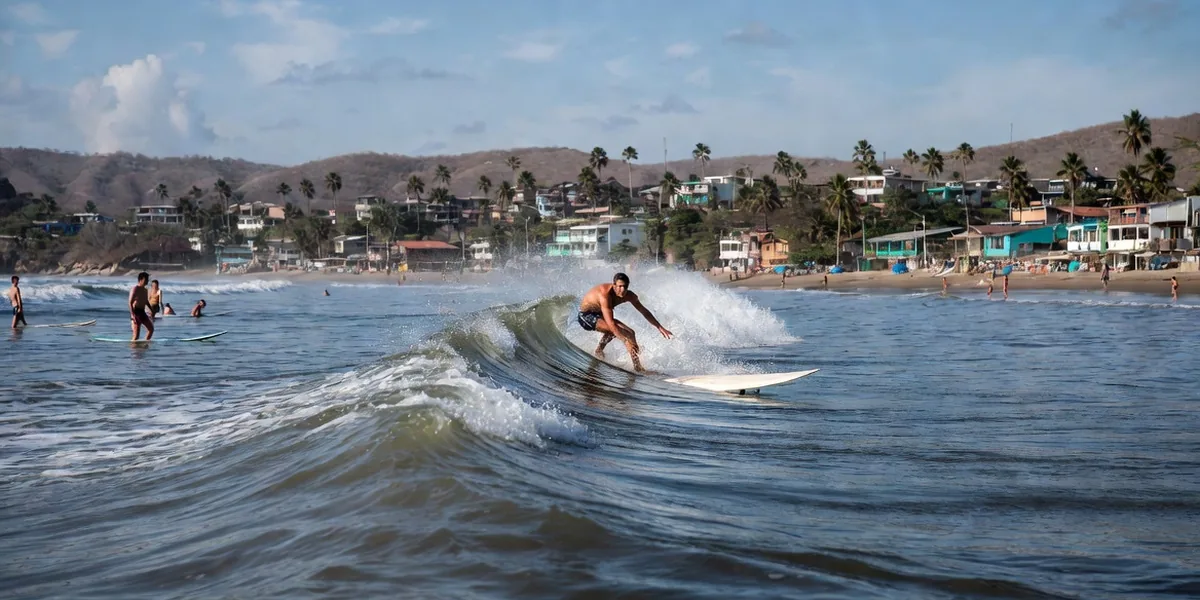
The main beach has a beginner shelf and a real peak. Use the first. Leave the second to people who can stand up without turning it into a collision. Here's what boards were actually charging in 2026, and where to surf without being the problem.
First time in Sayulita? Start with the complete Sayulita guide.
The 2026 Lesson Band
Surfboard Rental Prices in Sayulita (2026)
Board rental shops line the beach and the main street leading to it. Prices are fairly standardized across shops — don't expect to negotiate far below these numbers, but it's worth asking for a weekly rate if you're staying longer than three days.
Soft-top / foam board (longboard): from ~560 MXN a day ($10–15 USD). The right board for beginners and anyone learning. Foam boards are forgiving when they hit you, catch waves easily, and are the most available board type in Sayulita.
Fiberglass longboard (9ft+): $15–20 USD per day. For intermediate surfers who want a more responsive board than a foamy. Good for smaller days on the main break. Ask to see the board before renting — quality varies.
Shortboard (5'8"–6'6"): $15–25 USD per day. For intermediate to advanced surfers. The main Sayulita break is slow and mushy on small days. Shortboards shine when there's actual swell running, typically June–September.
Wetsuit top / rashguard rental: $5 USD per day. Worth having November–March when the water is cooler (low 70s°F). Most shops include one with a lesson.
Weekly rates: Most shops offer 20–30% off the daily rate for 5+ day rentals. Ask directly — the discount is real but rarely advertised.
If you're a beginner, rent the biggest soft-top they have. A 9-foot foam board catches three times the waves a shortboard does at the same skill level. You'll have more fun, learn faster, and hurt yourself less when it hits you. Save the shortboard for when you can actually surf. Sayulita complete guide.
Where to Surf Without Being the Problem
Beginners: the inside / lesson area on the main beach, morning. People who can already go: the proper peaks, or a ride to La Lancha if you booked a school that runs it. Longboarders cruising through the beginner soup at noon: you're the problem.
The Main Break — What to Expect
Sayulita's main beach break faces northwest and picks up Pacific swell with good consistency. The wave breaks over a sandy bottom, so falls are soft. For beginners, it's close to ideal: forgiving, readable, rarely terrifying.
The catch: it's crowded. The main break in high season has more beginners per square meter than almost any other surf spot in Mexico. On a busy morning, the lineup is chaos and the vibe depends on who else is in the water. Go before 8 AM — glassy water, no wind, half the crowd.
Peak Surf Season
June through September brings the most consistent and powerful swell — northwest groundswells generating clean 4–6 foot waves on good days. It's also peak rain season and peak heat. October and November are excellent: swell still running, crowds thinning, weather more manageable.
November through May is still surfable — rarely flat — but generally smaller and less consistent. Perfect for learning; less ideal if you came specifically for performance waves.
La Lancha — For Intermediate and Advanced Surfers
Fifteen minutes on foot south of Sayulita's main beach, or a short drive. La Lancha breaks faster, hollower, with more power. Smaller, more experienced crowd. Intermediate to advanced surfers who find the main break too slow should go directly here. Don't bring a longboard.
Punta de Mita — When You Have Outgrown Sayulita
Thirty minutes south by car. El Anclote at Punta de Mita is accessible by panga boat and has a consistent right-hand point break that holds real size. La Lancha near Punta de Mita (a different wave from Sayulita's La Lancha) is a reef break for experienced surfers only. Some schools sell it as the "we left town" wave, for more money. Fine if the main beach is a parking lot.
Car Rental in Sayulita — Do You Need One?
For surfing the main Sayulita break, no — the beach is a 5-minute walk from anywhere in town. For day trips to La Lancha, Punta de Mita, or San Pancho, a car or scooter helps. Car rentals in Sayulita itself are limited — most people rent in Puerto Vallarta (45 minutes south) and drive up. Scooter rentals run $25–40 USD per day and cover beach hopping within 20 km.
Reef-safe sunscreen only — chemical sunscreen is banned from the water at several Nayarit beaches and increasingly enforced. Bring your own water. The surf shops on the beach sell snacks and cold drinks but at a markup. A small dry bag for your phone and cash is worth having. Sayulita things to do.
San Pancho — The Underrated Alternative
Twenty minutes north of Sayulita on the Riviera Nayarit coast. San Pancho has a beach break that's less crowded than Sayulita's main break and gets similar swell. The town is quieter, with fewer tourists and a more authentic feel. Worth the drive if the Sayulita lineup is too crowded or you want a different context for the same wave quality. Full town rundown on the San Pancho guide.
